

When to Start Sleep Training a Baby
|
|
Time to read 6 min

|
|
Time to read 6 min
If you have ever searched when to start sleep training a baby, you already know there are a lot of opinions out there. One person says to start right away. Another says to wait. Before long, something that should help your family get more rest can start to feel overwhelming. At Moms on Call, we look at sleep a little differently.
Babies already know how to sleep. They do not need to be taught from scratch. What they need is a little help learning when and where sleep happens. That is where routines, familiar sleep cues, full feedings, and a calm environment come in. These everyday habits help your baby settle into a rhythm and give you a clearer idea of what to do next.
The phrase "sleep training" can sound intense. It may bring to mind strict rules, long nights of crying, or trying to force your baby to follow a schedule before they are ready. That is not how we approach sleep at Moms on Call. We focus on creating a routine that makes sleep feel familiar. When your baby experiences the same steps before naps and bedtime, they begin to recognize what is coming. A fresh diaper, a swaddle, a sound machine, a few snuggles, and a consistent sleep space can all become comforting signals that it is time to rest.
This is not about forcing sleep. It is about giving your baby a steady rhythm and giving you practical tools that make the day feel more manageable. The Mini Sleep Course walks families through the simple habits that can make naps and nights feel more predictable.
Parents often ask us, "Is sleep training necessary?" Not in the way it is sometimes described. Your baby does not need a formal lesson on how to fall asleep. However, babies do need consistency and clear cues that help them know when it is time to sleep. Without a predictable routine, it is easy to fall into a pattern of feeding, rocking, walking, driving, or trying something new every time your baby wakes. We have been there, and we know how quickly that can become exhausting.
A familiar routine gives everyone something steady to return to. It does not mean every day will go perfectly or that you have to follow the clock down to the minute. It simply means your baby begins to learn the general flow of the day. Our blog, The Truth About Sleep Training, shares more about why we focus on healthy habits instead of complicated sleep methods.
When parents ask about the ideal age for sleep training, our answer is that you can begin supporting healthy sleep from the very beginning. During the newborn stage, the goal is not a perfect schedule or a full night of sleep. It is creating a gentle pattern around feeding, awake time, naps, and bedtime. Those small, repeated habits lay the groundwork for sleep as your baby grows.
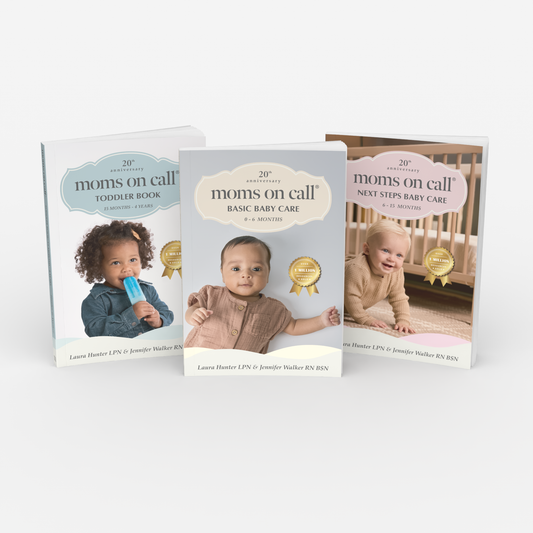
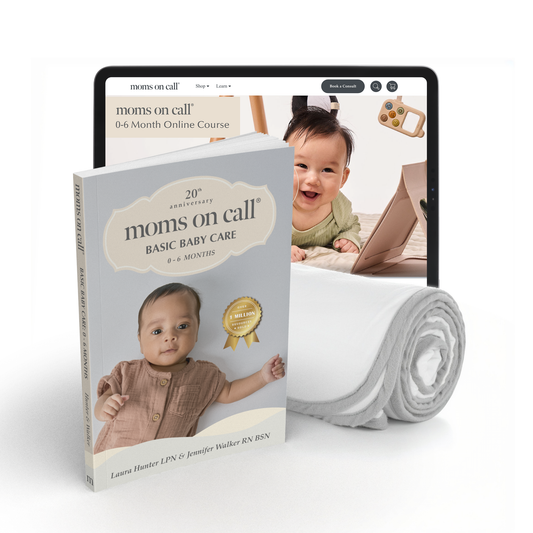
By around 4 to 6 months, many babies are ready for a more structured routine and longer stretches of independent sleep. Still, there is no single sleep training age that is right for every baby. Prematurity, feeding needs, health, and development can all affect timing. The Moms on Call 0–6 Month Book includes age-appropriate schedules and step-by-step guidance, so you are not left wondering what your baby's day should look like.
When you are figuring out when to start sleep training a baby, begin with the parts of the day you can control. A few simple habits can make a big difference, and the Moms on Call App: Insider Complete makes it easier to keep schedules, routines, and sleep guidance close by throughout the day.
Your baby's sleep space does not need to be fancy. It just needs to be safe, comfortable, and consistent. Choose a crib or bassinet that meets CPSC safety guidelines. Use a firm, flat mattress with a snug-fitting sheet, and keep blankets, pillows, toys, bumpers, and other loose items out of the sleep space.
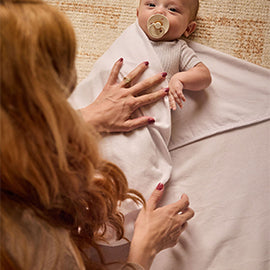
Keep the room dark and at a comfortable temperature. Whenever possible, use the same space for naps and nighttime sleep. Over time, simply entering that room can help your baby recognize that it is time to rest. The LectroFan Classic is a helpful option for steady sound at home, while the Alpha Travel Sound Machine makes it easier to keep familiar sleep cues with you when you are away. For babies under 12 weeks who are not showing signs of rolling, a Swaddle Blanket can also help create a secure and familiar bedtime routine.
There is no magical sleep training age when everything suddenly falls into place. Sleep changes as your baby grows, and your routine will change along with it. Our article, Will My Baby Sleep Without Training?, offers more encouragement to families who worry they have missed the right time to begin.
When you are exhausted, it is easy to feel like everyone else's baby is sleeping and yours is the only one who is not. We promise, you are not alone. Learning when to start sleep training a baby is less about choosing one perfect method and more about creating habits your family can repeat. Full feedings, predictable routines, a calming bedtime ritual, and a safe sleep space can help your baby settle into a healthy rhythm.
Some days will go smoothly. Other days will not. That does not mean you are doing anything wrong. Return to the routine, stay consistent, and give both yourself and your baby a little grace. Moms on Call has helped hundreds of thousands of families feel more confident through every stage. Explore the Moms on Call Complete Collection, online courses, and consultant network for practical guidance and personalized support as you create a sleep-positive routine that works for your family.

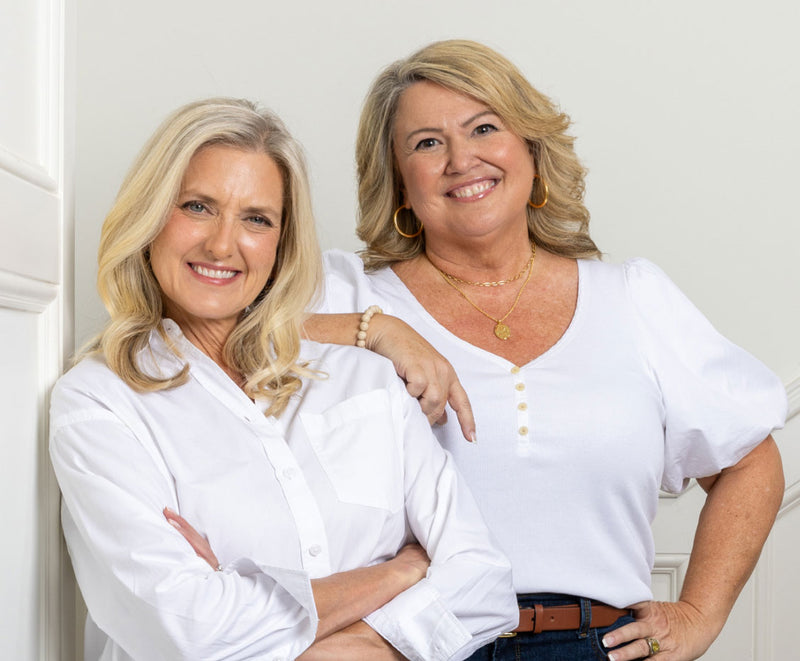
Laura Hunter, LPN and Jennifer Walker, RN, BSN
Co-Founders of Moms on Call, Pediatric Nurses and Moms to 8 kids between them, Laura Hunter and Jennifer Walker created Moms on Call to simplify parenting. Through their books, online courses, podcast and content, they help parents everywhere navigate the first four years with confidence and better sleep.