

6 Month Sleep Schedule
|
|
Time to read 11 min

|
|
Time to read 11 min
Half a year! The tiny, sleepy newborn you brought home is now a baby who sits up to survey the room, reaches for your dinner plate to steal a bite and has opinions loud enough that you never have to guess how they're feeling. Month six is some parent’s favorite stage of the first year. Sleep has settled into a routine, babies are truly interactive and your little one is mobile but can’t race to the stairs quite yet. This is the month your baby likely graduates from the 4-6 month schedule into the 6-8 month routine. Solids get an upgrade from a fun twice-a-day experiment toward real meals with more textures and clear preferences. There's a 6-month well visit on the calendar, a first tooth possibly making its debut and a whole lot of new physical skills coming online at once. If all that developmental activity briefly ruffles your baby's sleep, don't panic. At Moms on Call, we call that a progression, not a regression, and your routine is exactly what carries you both through it. This post walks you through what to expect across sleep, feeding, development and key reminders. As always, the full schedules and the details that bring it all together live in the Moms on Call 6-15 Month Book and our online courses.
The move to the 6-8 month routine. As your baby crosses the half-year mark, they're likely ready to graduate from the 4-6 month schedule into the 6-8 month routine. With this transition comes a little more flexibility in your day. The two-nap structure stays with an optional afternoon catnap, but the naps mature: aim for about an hour and a half in the morning and 1½ - 2 hours in the afternoon, with a consistent environment and nap routine for both.
Nighttime sleep holds strong at 10-12 hours. Your baby is fully capable of a long, uninterrupted night. Early morning wake-ups can still happen. It's completely normal for everyone, babies included, to stir about an hour before their actual wake time. Give your baby the chance to resettle rather than rushing in at the first sound.
When sleep gets bumpy: the progression, not the regression. You may have heard about a "6-month sleep regression." At Moms on Call, we reframe this as a progression or a developmental breakthrough. These are stretches where sleep gets disrupted in the absence of illness and they tend to coincide with big milestones like sitting up, increased awareness and teething. A progression typically lasts 3-5 days. The way through it is consistency: keep two naps in the crib, hold your naptime routine steady (diaper change, snuggles, storytime, soothing music) and resist the urge to overhaul anything. Don't fret if sleep isn't rock-solid every night this month. A little fussing, tossing and turning before settling is normal at this age.
A note on the sleep environment: as your baby becomes a more active sleeper, double-check the crib. It should be clear of bumpers, blankets and toys. A dark room, consistent white noise and a comfortable temperature remain your best tools.
Feeding is where month six really changes. Milk is still the main event, but solids become a bigger part of your baby’s day and nutrition.
Milk remains the foundation. This is worth repeating because it's easy to forget as solids ramp up: until age one, your baby gets all the nutrition they need from breast milk or formula. Most 6-month-olds are taking around 4 milk feedings per day and babies still need at least 24 ounces of breast milk or formula daily. Solids at this stage are for practice, exploration and building consistency, not for replacing milk. So no stressing if more ends up on the floor than in their belly!
Solids get more structured. If you've been doing solids, this is the month to build a rhythm. The Moms on Call approach starts solids at two times a day and works up to three. On the 4-6 month schedule, a common starting point is one food feeding around 8am and a second around 4pm, then gradually adding a lunch feeding as your baby gets the hang of it. Keep introducing single-ingredient foods a few days apart so you can watch for any reactions, and keep leaning on the Baby Food Introduction Calendar to stay organized.
New textures, new skills. Your baby is ready for more than thin purées now. Thicker textures, mashed foods and eventually soft, gummable pieces help develop the oral skills they'll need down the road. Expect enthusiasm, expect rejection and expect a genuinely impressive mess as your little one gets the hang of this entirely new skill.
The sippy cup intro. Six months is a great time to introduce a sippy with a little water at mealtimes. Beyond hydration, it’s a new skill for your little one to practice and offering it during solid meals can encourage a few extra sips. Hold it to their mouth for a few seconds and let them figure it out. No pressure, just practice.

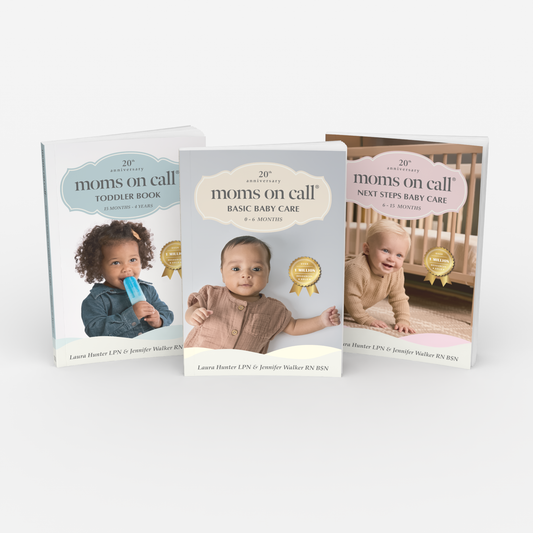
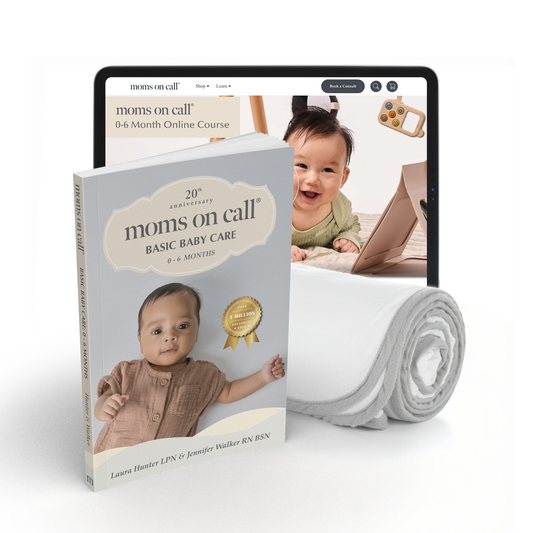
Get the Full Schedule and More
Our 6-15 Month Book is trusted by over 1 million families.
Order the BookIndependent sitting. Many babies can now sit unsupported, even if only for short, wobbly stretches at first. This opens up a whole new way of playing and seeing the world. Grab a blanket and sit on the grass outside and narrate the trees, birds, trucks and neighbors while your baby enjoys this new perspective.
First tooth. That front tooth may make its long-awaited debut this month. Some babies get theirs earlier, some much later and both are normal. Drooling, gnawing and gum-rubbing often precede the tooth by weeks.
Raking and grabbing. Your baby's hand skills are sharpening. They can rake objects toward themselves and are working toward the pincer grasp that comes later. Everything they grab still goes straight into the mouth so keep small toys and choking hazards tucked away safely out of reach.
Babbling with intention. Repetitive consonant sounds like "bababa," "mamama," and "dadada" are ramping up. Your baby is experimenting with the building blocks of language and loves a responsive audience.
Responding to their name. By now your baby reliably turns toward you when you say their name and reads the emotion in your voice. Narrate your day out loud since, even the mundane parts feel exciting when your little one is spending time with you.
Big feelings. Along with all that personality comes bigger emotional expressions from delight to frustration and everything in between. Your baby may show clearer separation awareness, preferring you and getting upset when you leave the room. This is healthy attachment, not a problem to fix.
Curiosity in overdrive. Your baby examines everything and turns objects over, tests textures and bangs things together to see what happens. This is early problem-solving and it's fascinating to watch.
The 6-month well visit is a big one. More vaccines are on the schedule and this is a natural checkpoint to talk through progress with solid foods, sleep, teething and any growth or development questions. Bring your list so it is top of mind at the pediatrician’s office.
Milk before solids, always until one. It's the easiest thing to lose track of as solids get exciting. Your baby's core nutrition is still coming from milk. Solids are practice and consistency-building. No pressure on quantities.
Progressions are temporary. If a developmental leap disrupts sleep this month, stay consistent for 3-5 days rather than reacting to every rough night. Encourage skill practice during the day like supervised sitting, rolling and reaching which both supports development and helps tire your baby out for better nighttime sleep.
Baby-proofing is non-negotiable now. A sitting, grabbing, increasingly mobile baby changes your home's risk profile overnight. Get down to their level, secure furniture, cover outlets and clear small objects. This is also a great time to consider an infant CPR and first-aid refresher.
Teething comfort is trial and error. What soothes your baby one week may not the next. Keep a variety of textured teethers on hand, some chilled. If fussiness lasts more than a few days or comes with a fever, check in with your pediatrician. It may be something other than teething.
Watch trends, not single days. Follow your parenting intuition and look at your baby's patterns over a 7-day window rather than fixating on one or two off days. Fussiness, appetite shifts and rough nights around big milestones are normal and usually pass quickly.
You've got a great partner in this. Whether it's the schedule transition, ramping up solids or navigating a progression, our Certified Moms on Call Consultants are nurses and moms who've been exactly where you are.
Six months in, and look at everything your baby can do: sit up, grab, babble, taste and let you know exactly who they are. The rhythm you've built through these first six months is the foundation for all of it. The back half of the first year brings even more: more mobility, more foods, more personality and a whole lot more fun.
Keep trusting your routine. It's carried you this far, and it will carry you forward!
Book a consultation with one of our Certified Moms on Call Consultants!
Check out these blogs for more timely support for your 6 month old baby.
Navigating the 6-8 Month Routine with Your Baby
Navigating the 6-Month Sleep Regression
Solid Food Progression Extras
Baby Food Introduction Calendar
Right around the 6-month mark is the natural time to graduate from the 4-6 month schedule to the 6-8 month routine, as long as your baby is healthy and growing well. This new routine keeps two naps a day but they change as you aim for about an hour and a half in the morning and 1½ to 2 hours in the afternoon with some babies needing that late afternoon catnap. You'll also notice a bit more flexibility in your day. Begin the day consistently around 7am, stay steady with the new timing and expect the adjustment to take about 3-5 days. The full 6-8 month schedule details are in the 6-15 Month Book.
At Moms on Call, we don't call it a regression. Instead, we call it a progression, or a developmental breakthrough. These are stretches where sleep gets disrupted in the absence of illness and they usually line up with big milestones like sitting up, teething and increased awareness of the world. A progression typically lasts just 3-5 days. The way through is consistency: keep two naps in the crib, hold your nap routine steady, encourage skill practice during the day and make sure feeds stay full. Resist the urge to overhaul your routine since staying the course is what moves your baby through it quickly.
The Moms on Call approach starts solids at two times a day and works up to three. A common starting structure is one food feeding around 8am and a second around 4pm, then gradually adding a lunch feeding once your baby is comfortable. Remember until age one, your baby gets all the nutrition they need from milk. Solids at this stage are for practice, exploration and consistency, not for replacing milk feeds. There's no pressure on how much your baby actually eats. Some meals are enthusiastic; others end up on the floor. Both are perfectly normal.
Early morning wake-ups are one of the most common sleep challenges at this age and often they're not a true wake-up at all. It's completely normal for everyone (babies included!) to stir about an hour before their actual wake time. The key is not to rush in at the first sound. Give your baby the chance to resettle on their own. Keep the room dark, the white noise consistent and your morning start time steady around 7am. If your baby is genuinely up for the day well before that, doublecheck that the room is dark enough and that bedtime isn't too early.
Yes and it's a healthy sign of development, not a setback. Around 6 months, your baby understands object permanence better and realizes that when you leave, you still exist somewhere else. That awareness can bring some separation distress. It means your baby has formed a secure attachment to you which is exactly what you want. Stay consistent and reassuring, keep your goodbyes calm and brief and know that this is a normal phase that typically peaks between 6-9 months and eases over time.
It could be either. Month six is prime time for both teething and developmental progressions, which can overlap. Teething often comes with specific signs: heavy drooling, swollen or tender gums, gnawing on hands and toys and sometimes a low-grade fussiness. A developmental progression tends to coincide with new skills like sitting up. Try comfort measures (chilled teethers, extra snuggles, patience) and stay consistent with your routine. If the fussiness lasts more than 2-3 days, comes with a fever, or something just feels off, have your pediatrician check those ears. It isn't always teething and it's always worth ruling out an ear infection or illness.

Laura Hunter, LPN and Jennifer Walker, RN, BSN
Co-Founders of Moms on Call, Pediatric Nurses and Moms to 8 kids between them, Laura Hunter and Jennifer Walker created Moms on Call to simplify parenting. Through their books, online courses, podcast and content, they help parents everywhere navigate the first four years with confidence and better sleep.