

11 Month Old Sleep Schedule
|
|
Time to read 8 min

|
|
Time to read 8 min
Somewhere on your phone, there's probably a list titled "first birthday’ with a list of guests, cake details, a banner, maybe a theme that seemed like a great idea at 2am a few months ago. It's a fun season to celebrate! The baby who once fit in the crook of your arm now cruises along the sofa, gives out high-fives and delivers an entire speech to the cat. A few real words might be in the mix. An unstoppable interest in anything with buttons certainly is. Eleven months is full of small victories and big feelings and the moods can swing from delight to meltdown in under a minute. You're on the Moms on Call 11-month routine now, a bridge between the structure of the last few months and the toddler schedule just ahead. This post walks through sleep, food, milestones and a to-do list for the final stretch before the big day. The full routine, with every timing and tip, lives in the Moms on Call 6-15 Month Book and our online courses.
Last month, your little one might have shown their negotiation skills asking for one more story, one more hug, one more goodnight. This month is about holding the line with a smile. The routine is doing its job, and your baby is doing theirs they find their voice and ability to share what makes them happy, miserable and everything in between. Here's tips from the experts at Moms on Call for your 11 month old sleep schedule.
Nights. Aim for ten to twelve hours for a solid nighttime stretch. An early riser is usually the most common complaint at this age. Keep the room dark, the white noise on and the morning start time steady so your baby's body clock doesn't drift earlier.
Naps. Two a day. A baby who fights a nap is not necessarily ready to drop it. Rather than switching things up at the first protest, look for a pattern over a couple of weeks. If you do see a consistent shift, a Moms on Call Consultant can help you decide what to do and the full morning-nap transition plan is covered in our blog How to Drop Your Toddler's Morning Nap Easily when you see those signs consistently over a few weeks.
Safe sleep still applies. Keep the crib bare. Soft objects, including loose blankets and pillows, should stay out until after the first birthday and your pediatrician can tell you when a small lovey is appropriate. The mattress should stay at its lowest setting now that your baby is pulling up and climbing.
Party planning, nap-style. If you're hosting a first birthday, schedule the celebration after a nap, not during it. A well-rested baby makes for better photos and fewer tears over the cake.
Practice with new surroundings. If a trip or a visit is coming, keep as much of the routine intact as you can: the same nap routine, the same white noise, a familiar sleep sack or pajamas. Predictability travels well.
The big feeding story this month is rather simple: you're getting ready for whole milk.
Whole milk, soon. Moms on Call recommends starting the move to whole milk about one to two weeks before your baby's first birthday. If your baby resists, you can ease in over four days. On day one, offer three ounces of breast milk or formula with one ounce of whole milk. On day two, go half and half. On day three, offer one ounce of breast milk or formula with three ounces of whole milk. By day four, it's all whole milk. After the switch, aim for about 16 ounces a day total, counting milk at meals as well as yogurt, smoothies and other dairy. Check in with your pediatrician if your baby has a milk allergy or intolerance.
Say hello to the cup. Offer milk in a cup at every meal and keep offering even if your baby grumbles. Straw cups, open cups and spouted cups with the stopper out are all worth trying. If a bottle is still part of the routine, ask your pediatrician about a timeline for finishing with bottles.
Healthy fats matter. Babies' growing brains need them. Avocado, full-fat Greek yogurt, eggs, cheese, salmon and dark-meat chicken are all good choices. Ask your pediatrician for guidance on introducing nut butters and other common allergens.
Family-style meals. Your baby should be eating alongside you for most meals, with soft, cut-up versions of what you're having. Keep your baby in the high chair or at the table, sitting tall, with you close by.
Still no honey until the first birthday has passed.

Get the Full Schedule and More
Our 6-15 Month Book is trusted by over 1 million families.
Order the BookHere's what the eleven-month view tends to look like:
First steps (or close to it). Plenty of babies take their first steps between 9 and 15 months. Standing alone, letting go of the furniture and wobbling a few feet are all signs your baby is almost there. Don’t stress if baby isn’t walking by one. There is a big range for normal timing of first steps.
First words. "Mama" and "dada" with meaning, plus maybe one or two others, such as "ball," "dog" or "uh-oh." Understanding runs far ahead of speaking.
Following simple requests. "Give me the ball" or "Come here" start to be understood, especially when you add a gesture.
Pointing to share. Your baby points not just to ask for something but to show you something and that's a major communication leap.
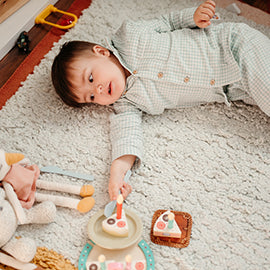
Pretend play begins. Talking on a toy phone, "feeding" a stuffed animal, or brushing their own hair with a brush.
Stacking and sorting. Blocks, cups and shape sorters keep little hands and minds busy.
Favorite things. A beloved book, a particular song, a go-to toy. Expect to hear them requested repeatedly.
Mixed feelings about goodbyes. Some babies are easing out of separation worries; others are right in the thick of it.
The last few weeks of the first year are a little bittersweet and a lot of fun. Your baby is looking less like a baby and more like a small, determined person, and you're a different parent than you were a year ago. Stay with the routine, stock up on cake candles, and enjoy the final stretch.
Book a consultation with one of our Premier Certified Moms on Call Consultants!
Check out these blogs for more timely support for your 11 month old baby.
The 12-15 month routine is the next stop after the 11-month one and it begins around the first birthday. Until then, stay with the 11-month schedule, keep your timing steady and lean on the 15-minute grace period when you need it. The full 12-15 month routine, including the options for two naps and one nap, is in the 6-15 Month Book.
Moms on Call typically moves from two naps to one around 12 to 15 months, so most 11-month-olds aren't ready yet. A single protested nap isn't a reason to switch. When the time does come, the transition usually takes about nine days. Plan active mornings, keep wake-up and bedtime steady and aim for one afternoon nap of roughly an hour and a half to two hours.
Aim for the two weeks leading up to the birthday. If your baby balks, blend whole milk into their usual milk and shift the ratio over four days until it's all whole milk. Offer it in a cup at meals, and plan on about 16 ounces a day in total, yogurt and other dairy included. If your baby has a milk allergy or intolerance, ask your pediatrician about alternatives.
There's a wide range. Some babies have a couple of clear words, such as mama, dada or ball, while others are still mostly babbling. Understanding comes before speaking, so look for your baby to respond to their name, follow simple requests and point to things. Keep naming and reading together and mention any concerns at the 12-month visit.
Schedule the party after a nap so your baby is at their best. Keep morning routines simple and nap timing as normal as possible. Plan for a short celebration rather than a long one. Give your baby a quiet corner to take a break if they get overwhelmed and keep bedtime on schedule even if the party runs late.
Not quite yet. The safest crib stays bare through the first birthday, and your pediatrician can say when a small lovey or blanket makes sense after that. In the meantime, a wearable sleep sack and footed pajamas keep your baby cozy.

Laura Hunter, LPN and Jennifer Walker, RN, BSN
Co-Founders of Moms on Call, Pediatric Nurses and Moms to 8 kids between them, Laura Hunter and Jennifer Walker created Moms on Call to simplify parenting. Through their books, online courses, podcast and content, they help parents everywhere navigate the first four years with confidence and better sleep.