

Mix it Up: Why Diet Diversity is Good for Growing Babies and Toddlers
|
|
Time to read 5 min

|
|
Time to read 5 min
As parents, we spend a lot of time thinking about what our babies eat. Are they getting enough fruits and vegetables? Iron? Healthy fats? Protein? Avoiding heavy metals and ultra processed foods?
But there's another important piece of the puzzle that doesn't always get as much attention: diet diversity! Offering babies a wide variety of foods, flavors and textures during the first years of life has multiple benefits. It can cultivate a healthier microbiome and help build adventurous eaters, supports important developmental milestones, encourages oral motor skill development and helps little ones become more confident at mealtime. The best news? It doesn't have to be complicated—but it does start earlier than you think.
As defined by the World Health Organization (WHO), diet diversity is present when the diet contains five or more of the following food groups:
Breast milk
Grains, roots and tubers
Legumes and nuts
Dairy products (cheese, yogurts)
Flesh foods (meat, poultry, fish)
Eggs
Vitamin A-rich fruits and vegetables
Other fruits and vegetables
Babies are born ready to learn, and mealtime is one of the biggest classrooms they'll experience. Introducing a broad range of foods exposes them to different flavors, colors, smells and textures, helping shape their preferences over time. In fact, research has shown that repeated exposure to a variety of foods can increase acceptance, even if a baby initially rejects something.
Diet diversity means introducing a variety of food groups—including top common allergens like peanuts, tree nuts, dairy, eggs, sesame, soy, and more—when your baby is developmentally ready and in accordance with your pediatrician's guidance.
Studies have also found a correlation between a diverse diet and fewer food allergies (talk about a win, win!).
Pediatric allergist and Mission MightyMe co-founder Dr. Gideon Lack’s landmark Learning Early About Peanut Allergy (LEAP) Study found that most peanut allergies can be prevented with early and regular peanut consumption, starting in infancy—a discovery that changed feeding guidelines around the world accordingly. With wider adoption, food allergy rates are dropping: a 2025 study in the Journal of Pediatrics found cases of new peanut allergies in babies dropped 43% after the guidelines changed as a direct result of Dr. Lack and his team’s seminal research.
Current feeding recommendations encourage introducing allergenic foods during infancy, then continuing to offer them regularly through toddlerhood as part of a varied diet. This early and ongoing exposure not only helps babies become familiar with different tastes and textures, but also supports the latest recommendations around food allergy prevention.
The key is consistency: Whether it's vegetables, fruits, whole grains or allergenic foods, regularly offering a wide variety of age-appropriate foods gives babies more opportunities to explore new flavors, build confidence at mealtime and develop healthy eating habits that can last a lifetime (trust us, they’ll thank you later). It’s perfectly normal and expected if your baby doesn't love every new food the first time. Keep trying!
If you hear that “early & often” can help with food allergy prevention and wonder what “often” really means, don’t stress: 2-3 times per week is usually enough. It doesn’t have to be daily (unless your kiddo just can’t get enough!), not with every meal and not obsessively tracked. Just consistent, repeated exposure over time! When babies and toddlers find a peanut snack they love, this becomes an easy addition to your family’s routine.
Many parents naturally focus on introducing new flavors, but texture is just as important. As babies grow, gradually moving beyond smooth purees helps them learn how to safely chew, move food around their mouths and coordinate swallowing. These experiences strengthen oral motor skills that support eating as well as speech development later on.
Offering age-appropriate textures also gives babies valuable sensory experiences that help build confidence with food. Every baby develops at their own pace, but introducing progressively more textured foods when they're developmentally ready helps them practice these important skills.
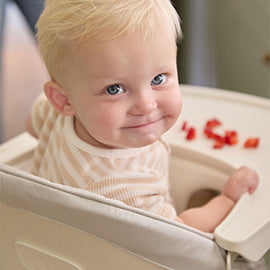
One exciting milestone that often appears around 9 months is the pincer grasp, the ability to pick up small pieces of food using the thumb and index finger. While this might seem like a simple skill, it's an important step in fine motor development and growing independence!
Finger foods give babies opportunities to practice:
Pincer grasp development
Hand-eye coordination
Self-feeding
Controlling how much food goes into their mouths
Building confidence at mealtime
Like any new skill, practice makes progress! Mix in safe snacking options like peanut and tree nut butter puffs, yogurt melties or small bite-size servings that let your baby test out their new tricks.
Trying new foods doesn't have to feel overwhelming. Some advice from moms who have been there: ease into it, keep serving a variety of foods, and give yourself grace.
Here are a few simple tips that can make the process easier:
Offer one or two new foods alongside familiar favorites.
Remember that babies often need multiple exposures before accepting something new.
Let babies explore with their hands. Mealtime can—and should!—be a little messy. (Like all baby phases, this too shall pass.)
Keep portions small and age appropriate.
Always supervise eating and follow your pediatrician's guidance on developmental readiness.
The goal isn't perfection, it's progress. You can do this!
The first years of life are filled with incredible learning opportunities, and food is one of them. By offering a wide variety of flavors, textures and nutrient-rich foods, parents help build skills that support confident eating for years to come.
For families looking for convenient snack options as babies become more confident self-feeders, foods that combine multiple textures and flavors can make practicing these skills easier.
That's one reason Mission MightyMe created Nutty Trail Mix, a thoughtfully designed toddler snack that combines freeze-dried fruit, yogurt melts and Nutty Puffs in one easy-to-serve mix. Nutty Trail Mix is a great way to get a variety of nuts, fruit, dairy and ancient grain sorghum into your little one’s diet with one easy snack! The different shapes, flavors and textures encourage self-feeding practice while giving little ones opportunities to strengthen their pincer grasp and experience a greater variety of tastes and textures in every handful. Nutty Trail Mix isn’t just an easy way for families to keep nuts in the rotation consistently as little ones grow—it also supports diet diversity with a taste kids love and ingredients parents can feel good about.
As always, choose foods that match your child's developmental stage, supervise eating closely and talk with your pediatrician if you have questions about introducing new foods or textures.